
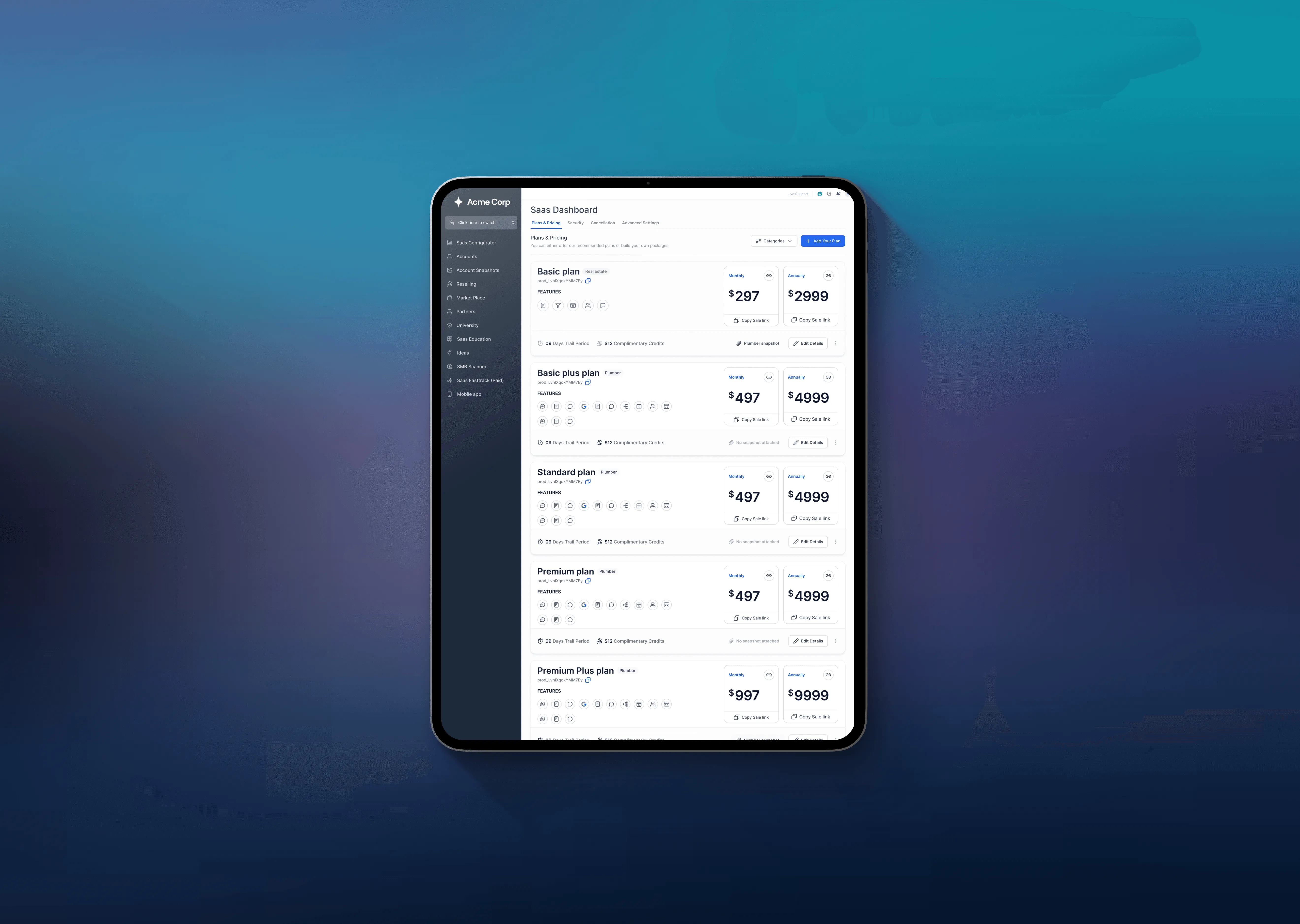
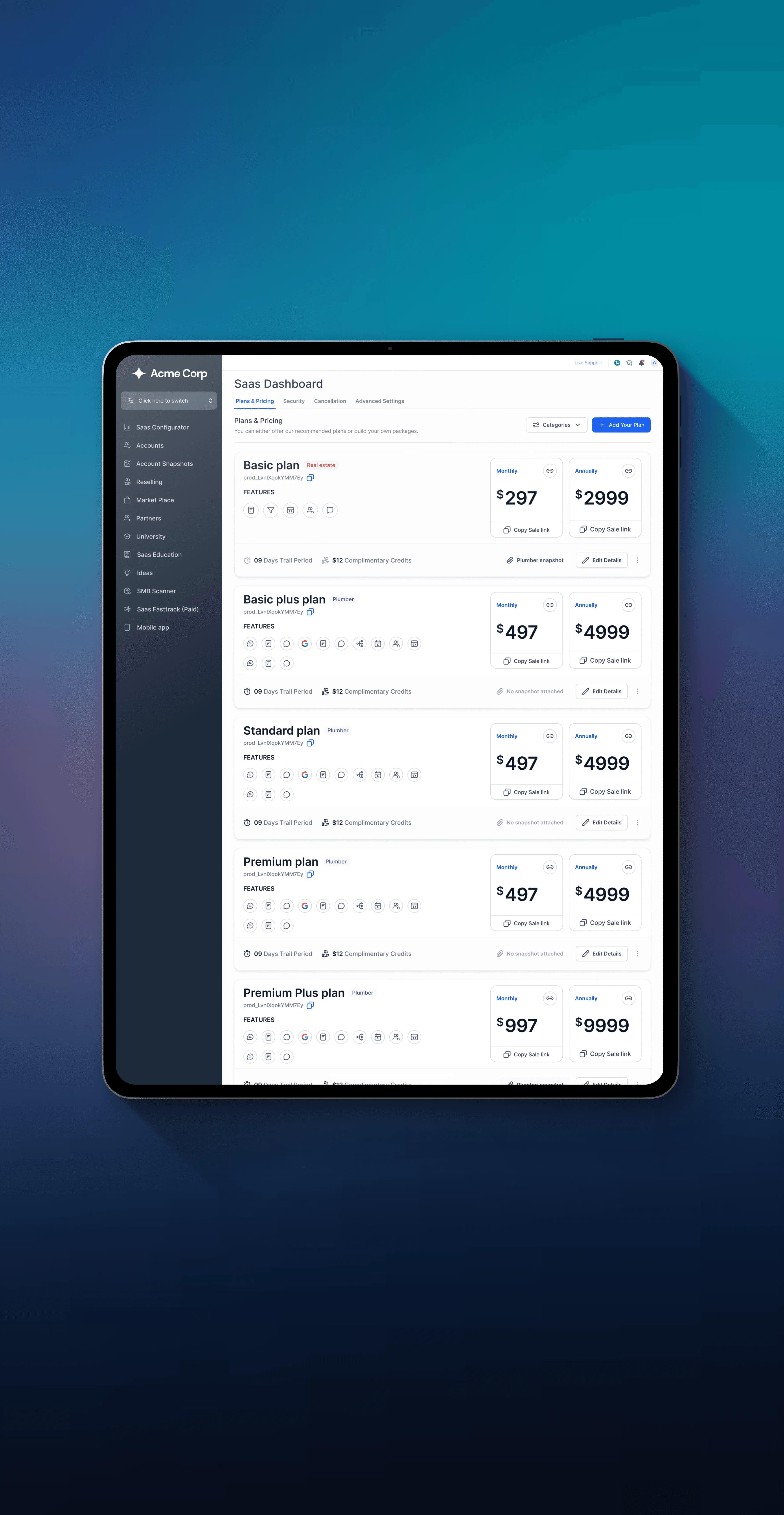
SaaS Plan Configurator (V2)
Re-architecting pricing infrastructure to unlock scalable SaaS revenue for 100k+ marketing agencies
My ROLE:
LEAD PRODUCT DESIGNER (END-TO-END)
Context — What This Product Actually Is (And Why It Exists)
HighLevel is a white-label CRM + marketing automation platform.
HighLevel is a white-label CRM built for digital marketing agencies that run ads, manage leads, and drive growth for local SMBs — dentists, gyms, real estate brokers, and law firms.
Instead of relying solely on $2k–$5k/month service retainers, agencies resell HighLevel as their own branded software — transforming from service providers into SaaS operators and building recurring subscription revenue.
It defines how they:
Package features
Set pricing tiers
Control user & contact limits
Resell usage-based services
Attach vertical-specific templates
The Trigger — When the System Hit Its Ceiling
What Was Live
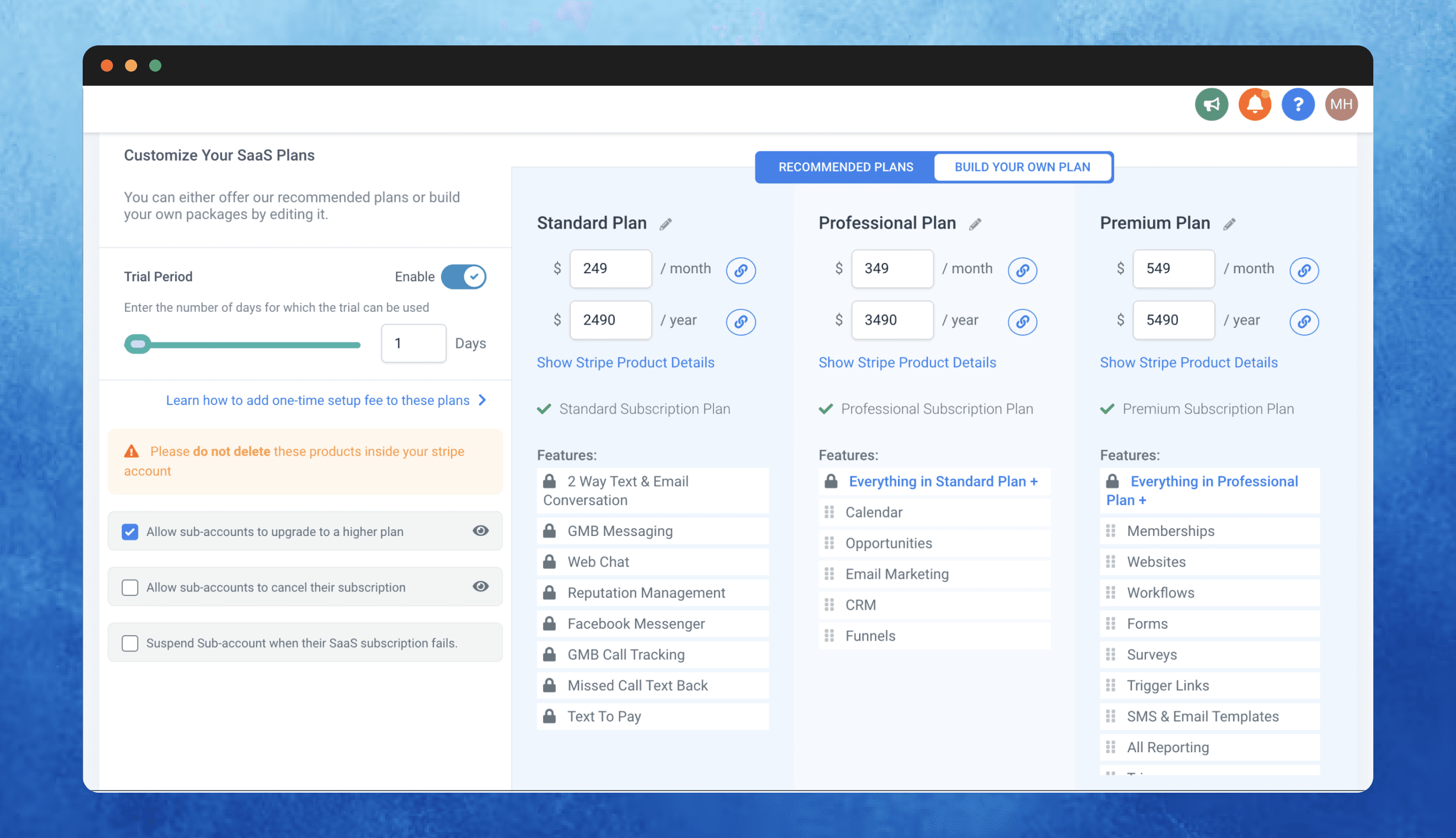
• Exactly 3 plans
• Starter / Pro / Elite
• Same trial duration for all tiers
• No structured vertical packaging
• No configurable monetization levers
• Flat pricing architecture
What the Agencies Actually Needed
• Industry-specific pricing tiers (Real Estate, Medical, etc)
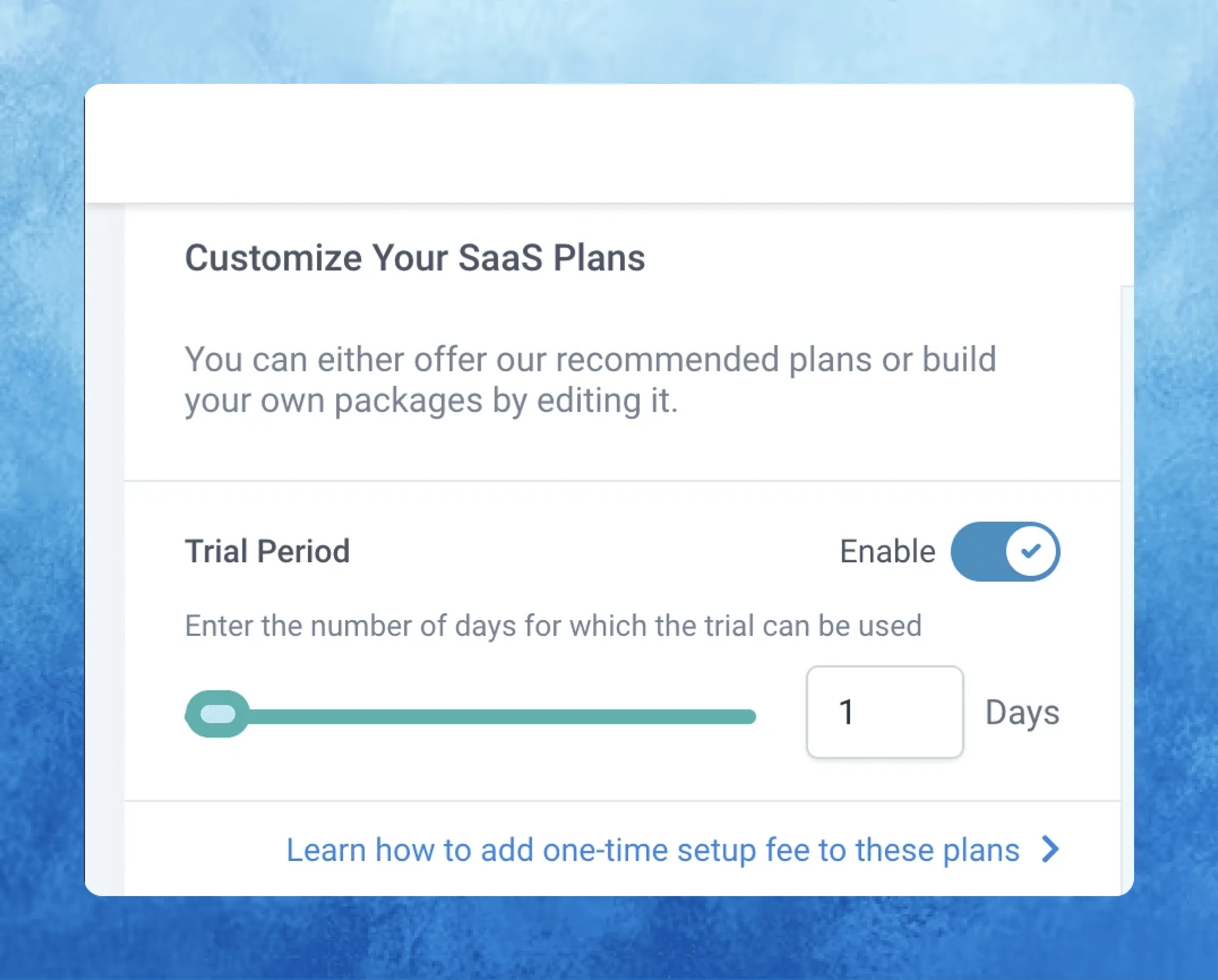
• Different trial strategies per plan
• User & contact limits per tier
• Usage-based rebilling margins
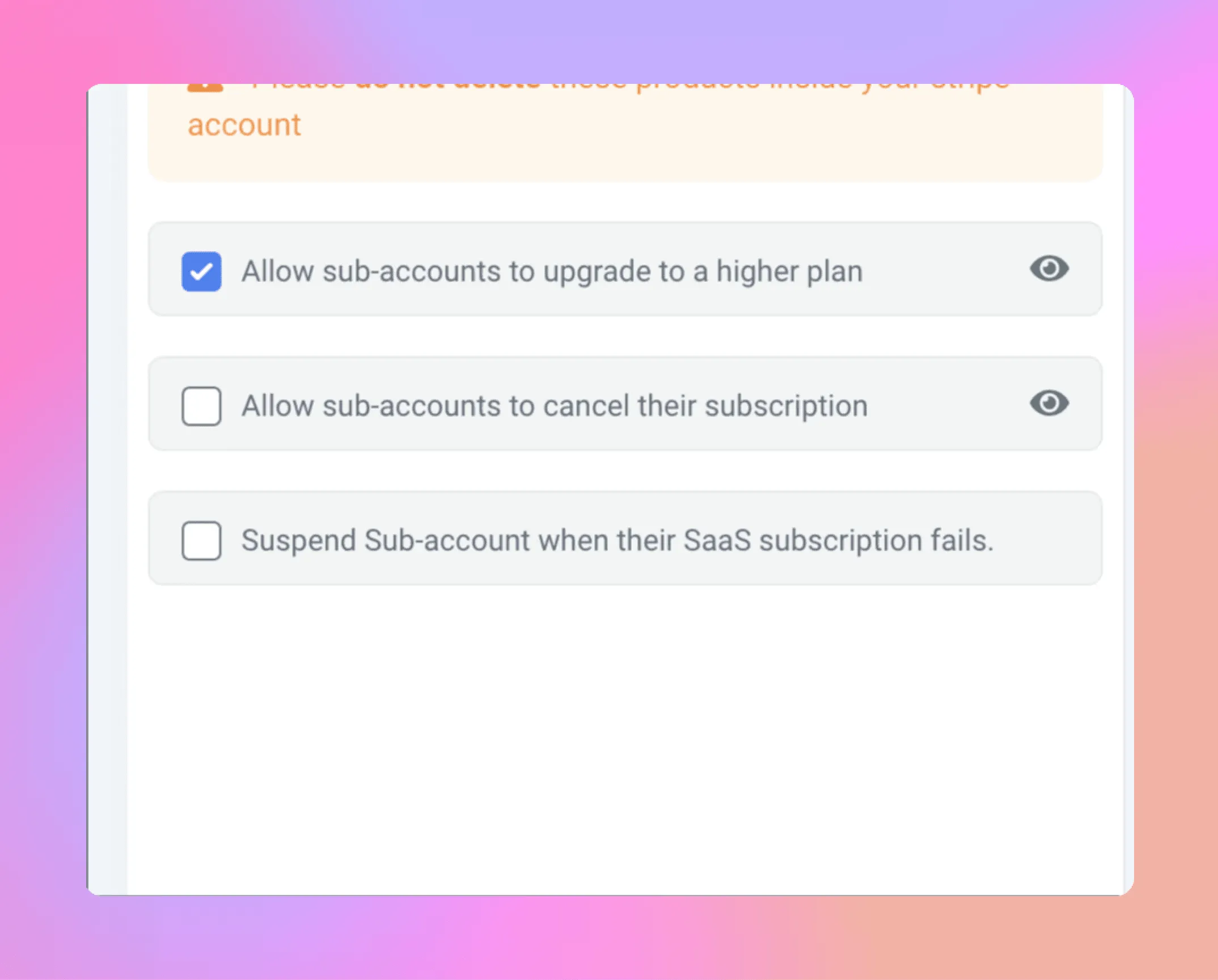
• Feature reselling control
• 10–20 pricing variants

Three static plans were trying to power modular SaaS businesses.
The Outcomes
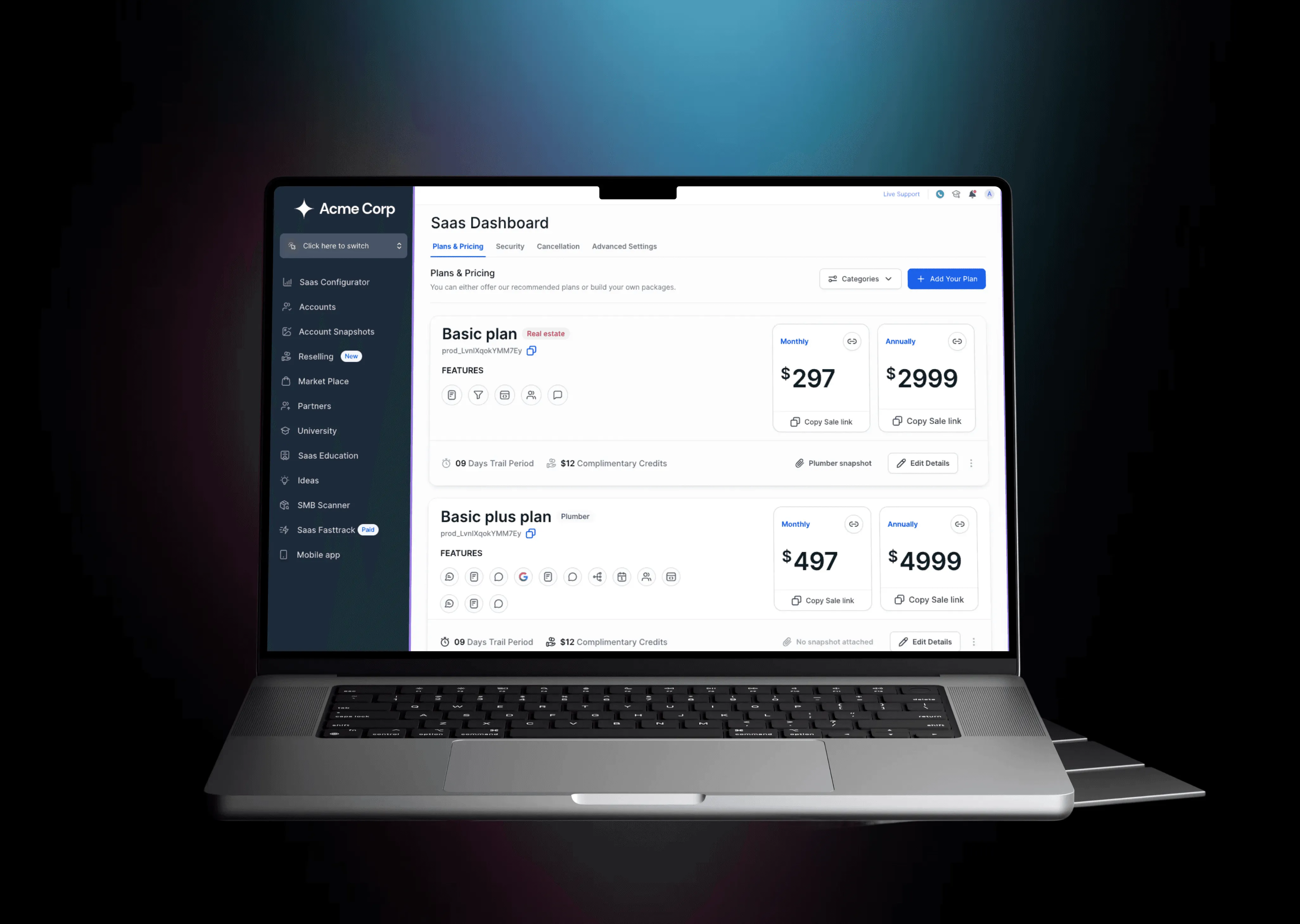
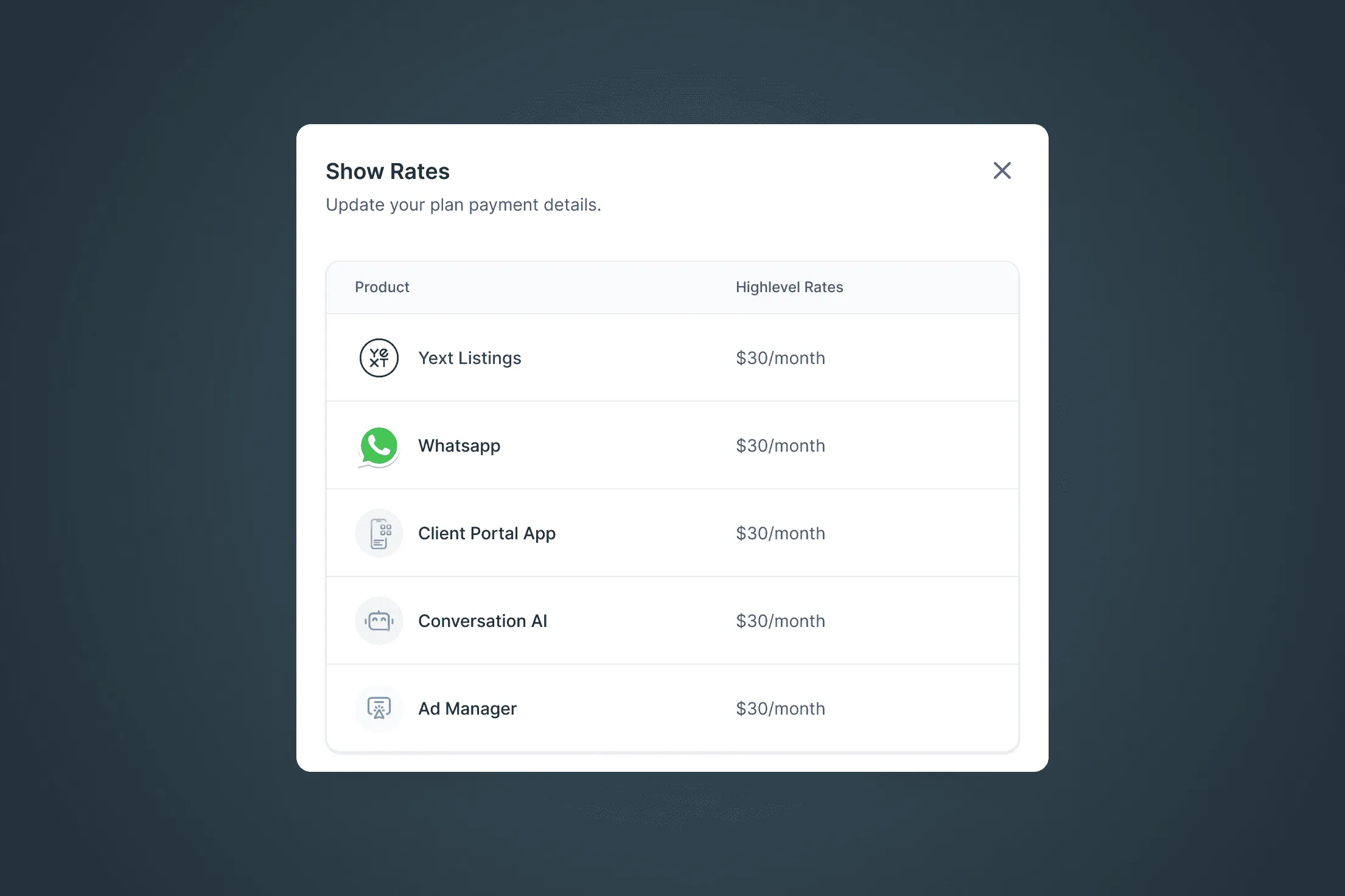
Product Snapshot



WHERE THE MODEL WAS BREAKING
Not:
“How do we add more plans?”
But:
“How do we allow 20+ monetizable tiers without breaking Stripe, feature inheritance, or subscription integrity at 100k+ scale?”
At this size, billing errors aren’t UX friction.
They’re financial risk.
There was no governing layer between pricing, Stripe, feature access, and usage logic. Adding tiers increased dependency risk, not scalability.
What Was Really at Risk
At this scale, misalignment doesn’t feel small.
• Pricing changes could desync billing
• Limit shifts could misalign access
• Provisioning gaps could break trust
This wasn’t about options.
It was about containing complexity before it cascaded.

RESEARCH THAT SHAPED THE DIRECTION
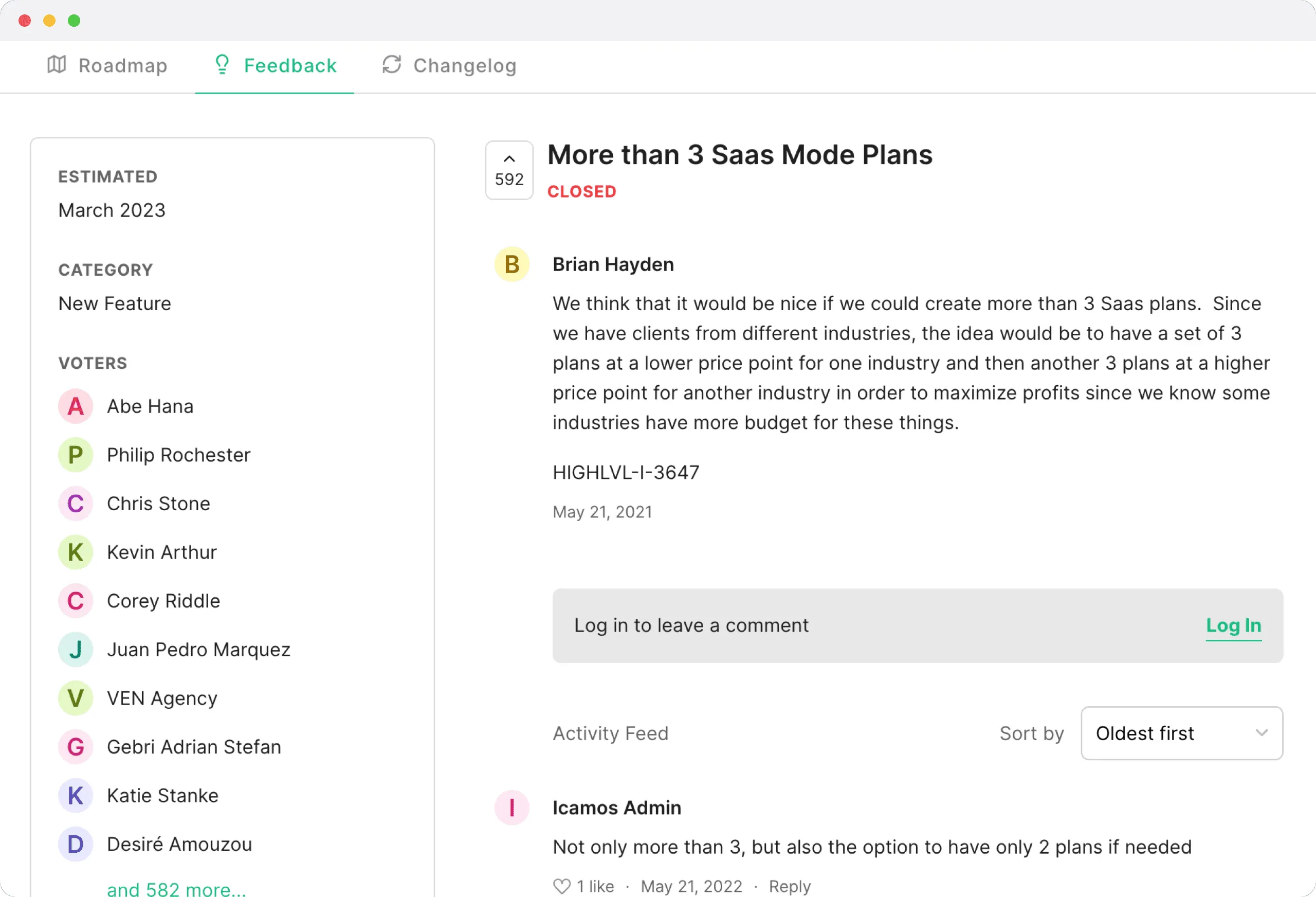
We didn’t start with wireframes. We started with demand. Through Canny feature requests (500+ votes), Facebook groups, town halls, and direct conversations with active SaaS-mode agencies, one pattern became undeniable: Agencies weren’t asking for more features. They were asking for more monetization flexibility.
We conducted interviews with active agencies using SaaS Mode.
• The 3-plan limit constrained vertical expansion. Agencies serving multiple niches needed structured pricing variations — not workarounds. • Trial periods and credits needed to vary by tier. A $97 entry plan and a $997 premium plan cannot share the same economic logic. • Pricing needed to align with operational scope. User limits, contact capacity, and feature bundles directly shaped perceived value. • Monetization wasn’t missing features. It was missing architecture.

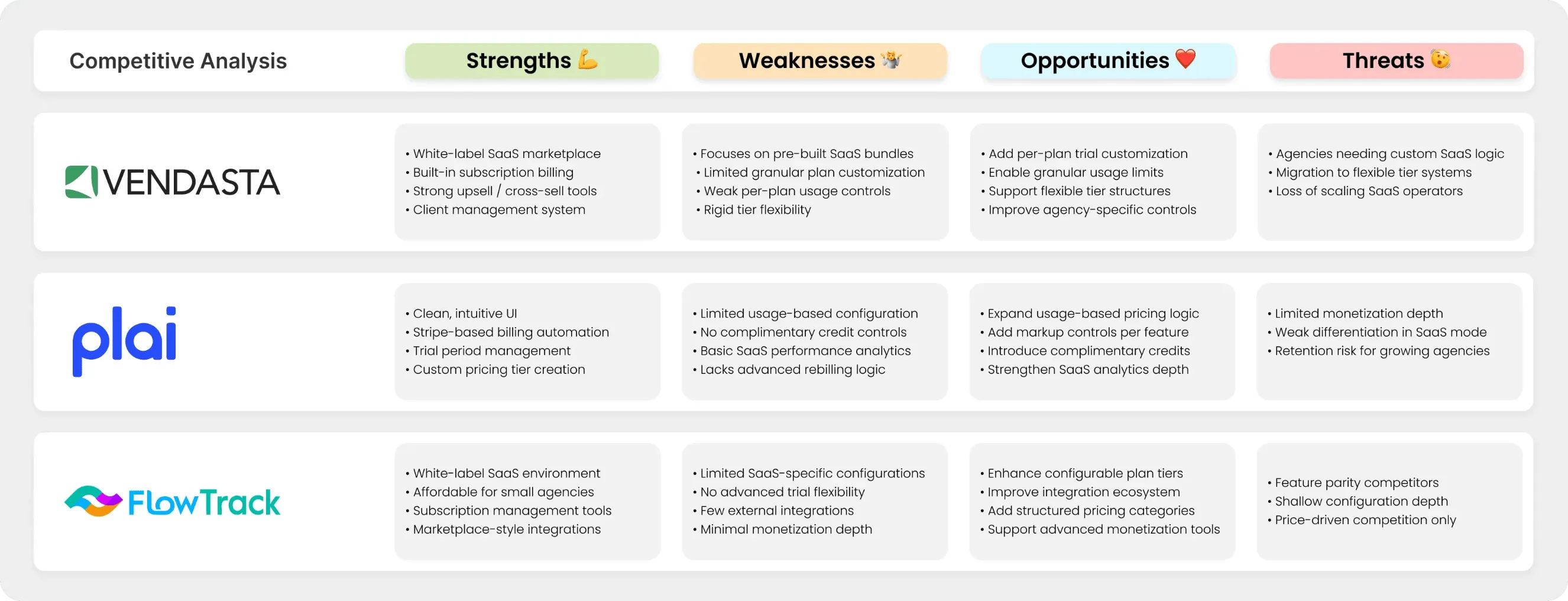
Competitors enabled white-label SaaS. They didn’t engineer pricing infrastructure. Tiers lacked structural containment between billing, limits, and provisioning. That systemic gap defined our strategic direction.
We reviewed leading Shopify-integrated inventory and SaaS management tools.
Competitive Gaps
Limited modular pricing logic
Cluttered configuration interfaces
Generic analytics disconnected from decisions
Weak API modularity
Limited white-label monetization depth
The opportunity was clear:
Win by embedding monetization into structure — not UI polish.
Competitors enabled white-label SaaS. They didn’t engineer pricing infrastructure. Tiers lacked structural containment between billing, limits, and provisioning. That systemic gap defined our strategic direction.
THE OPERATING MODEL
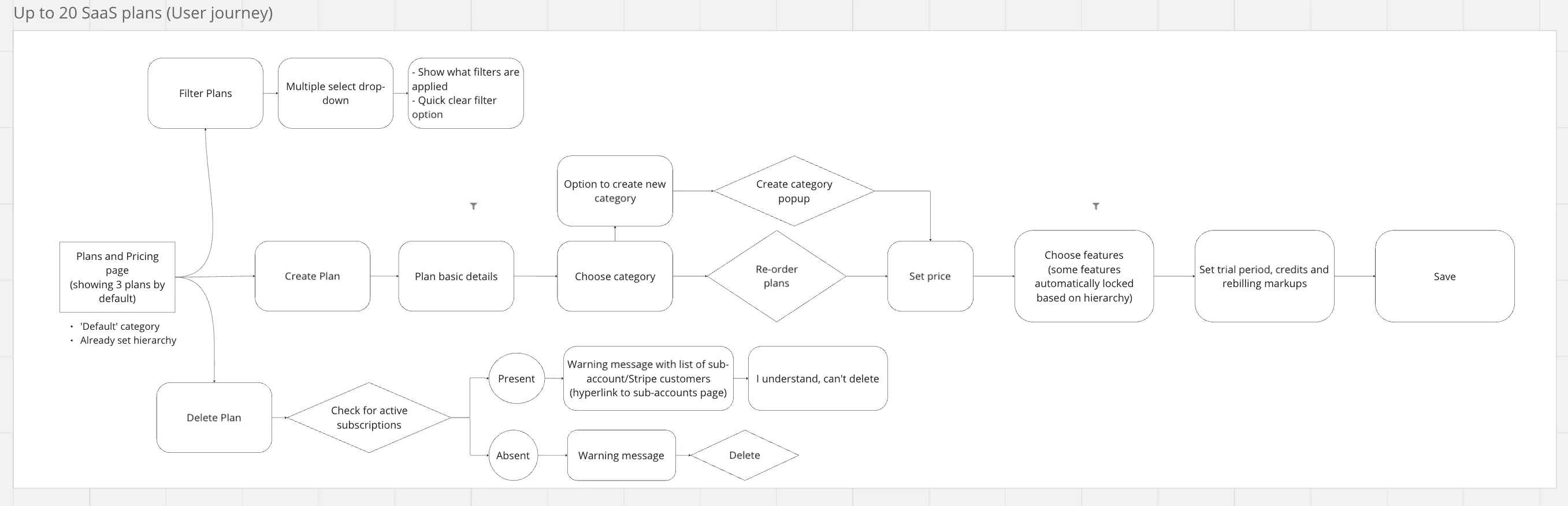
Tradeoff
Sales
• Maximum flexibility
• Fast niche targeting
• Unlimited edits
VS
Engineering
• Stripe desync risk
• Billing corruption
• Subscription mismatch
Structured flexibility: enforce category boundaries, maintain Stripe-safe mappings, and enable controlled feature provisioning.
I optimized for scale-first SaaS configuration over local flexibility, because at HighLevel’s scale, billing integrity breaks faster than UI freedom.
STRUCTURAL REDESIGN
Category-Based Pricing Architecture
• Stripe product ID mapping • Currency consistency • Structured grouping of tiers • Snapshot attachment logic • Contact limits per tier • User limits per tier • Feature enablement per plan
What We Rebuilt
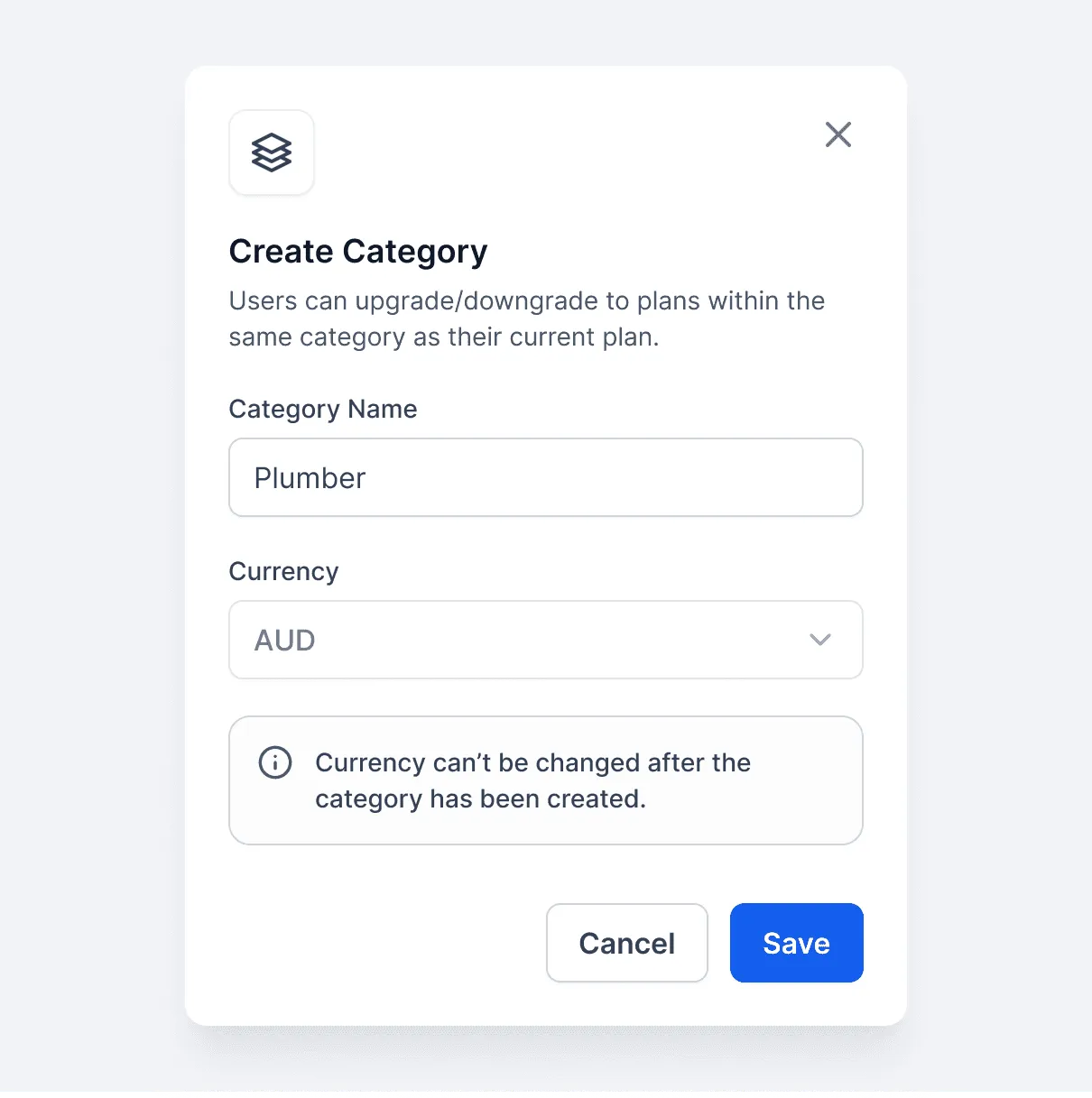
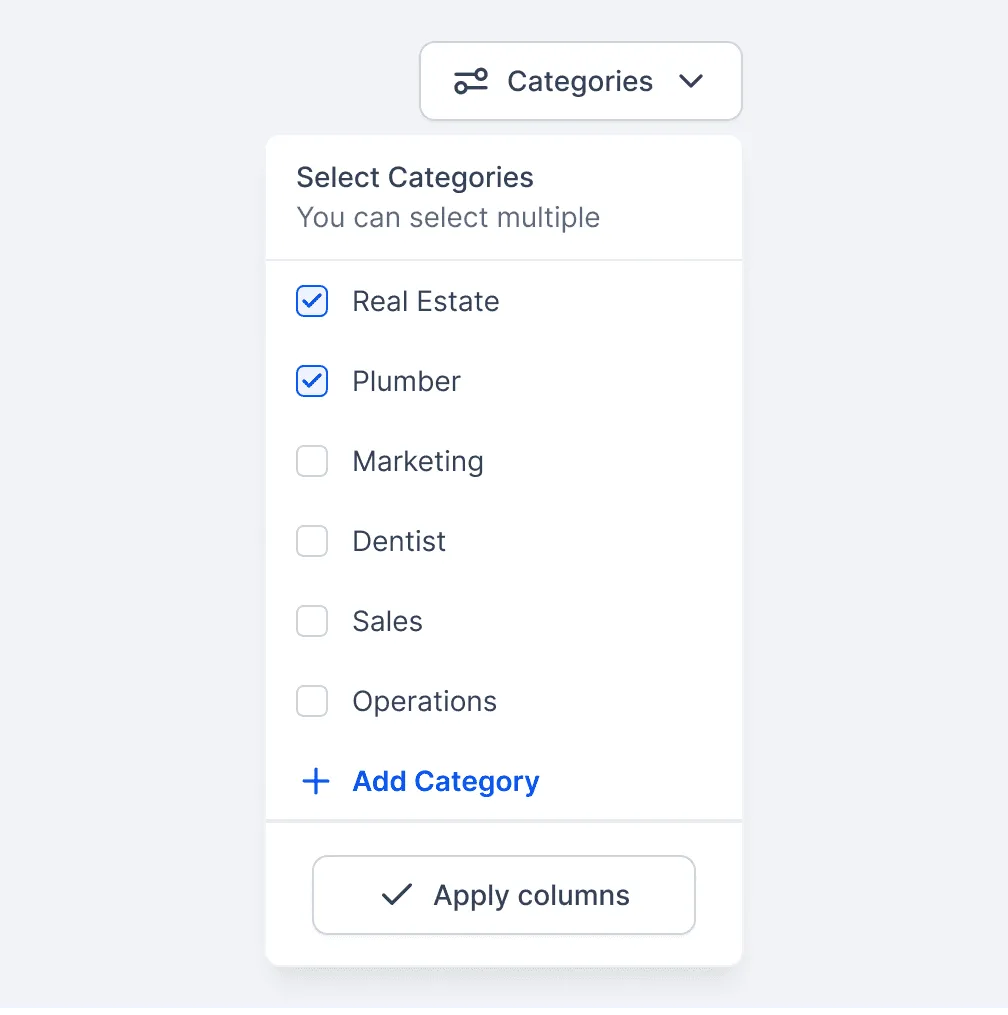
We replaced flat plans with Category-based pricing.
Each Category defines:
• Stripe product ID mapping
• Currency consistency
• Structured grouping of tiers
• Snapshot attachment logic
• Contact limits per tier
• User limits per tier
• Feature enablement per plan
This created order where there was duplication.
It did not automate upgrade paths — but it established scalable tier foundations.
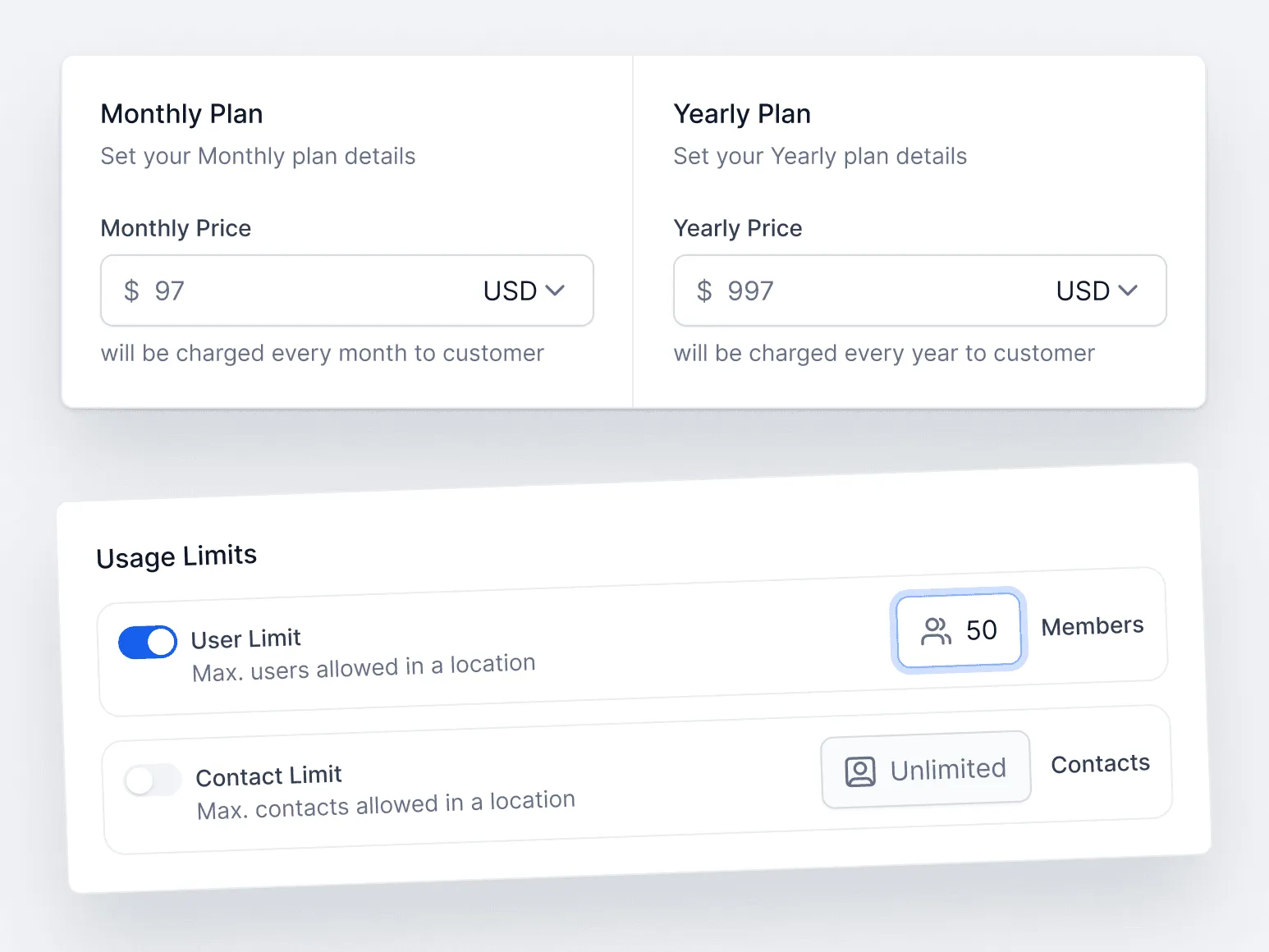
Each tier defines economic and operational limits per SMB account.
Agencies configure:
• Monthly and yearly pricing
• Currency-specific billing
• User limits
• Contact limits
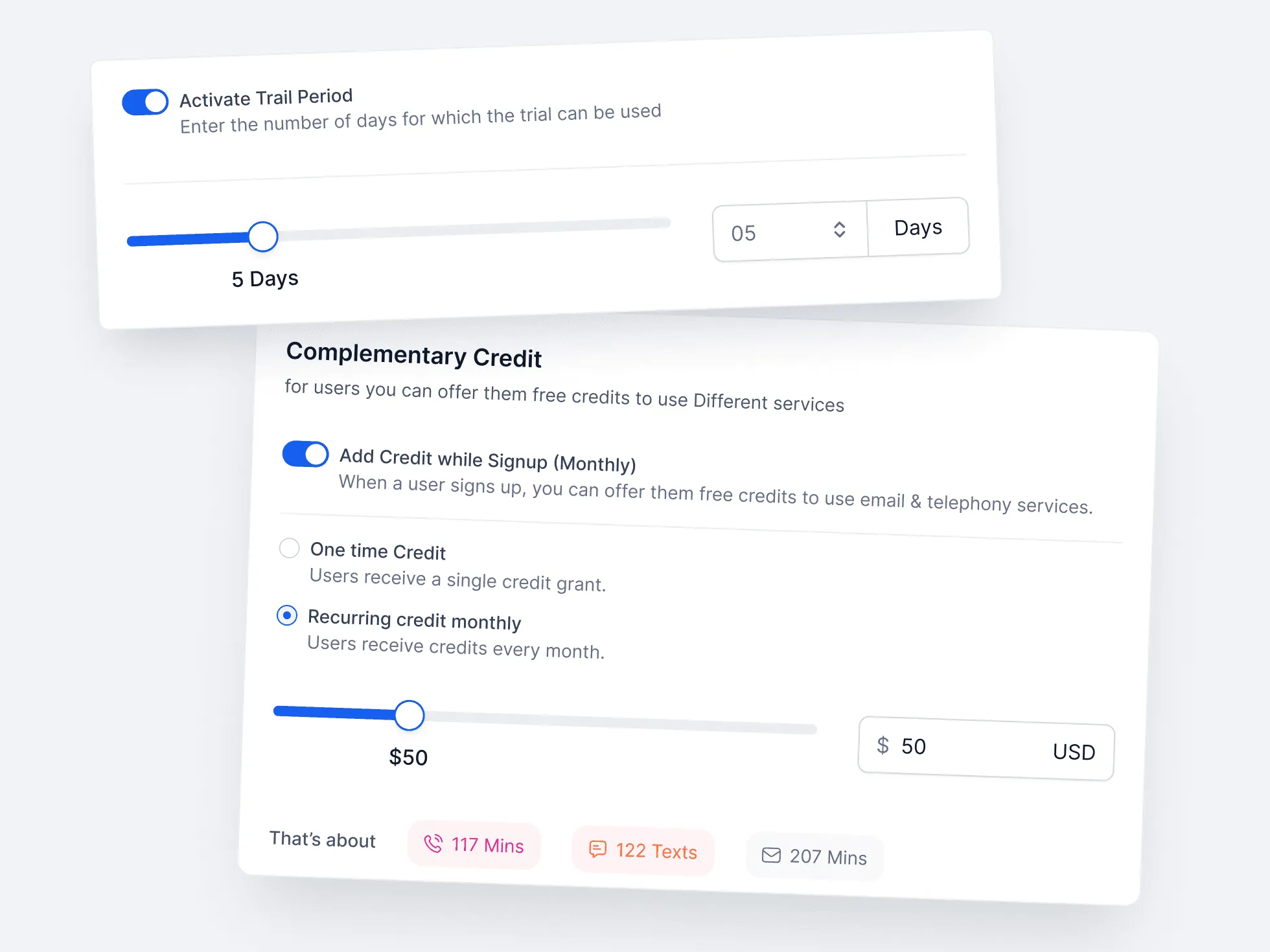
Embedded Monetization Controls
Every tier includes programmable revenue levers.
Pricing Controls
• Custom trial duration per plan
• One-time complimentary credits
• Recurring complimentary credits
• Recurring vs one-time billing
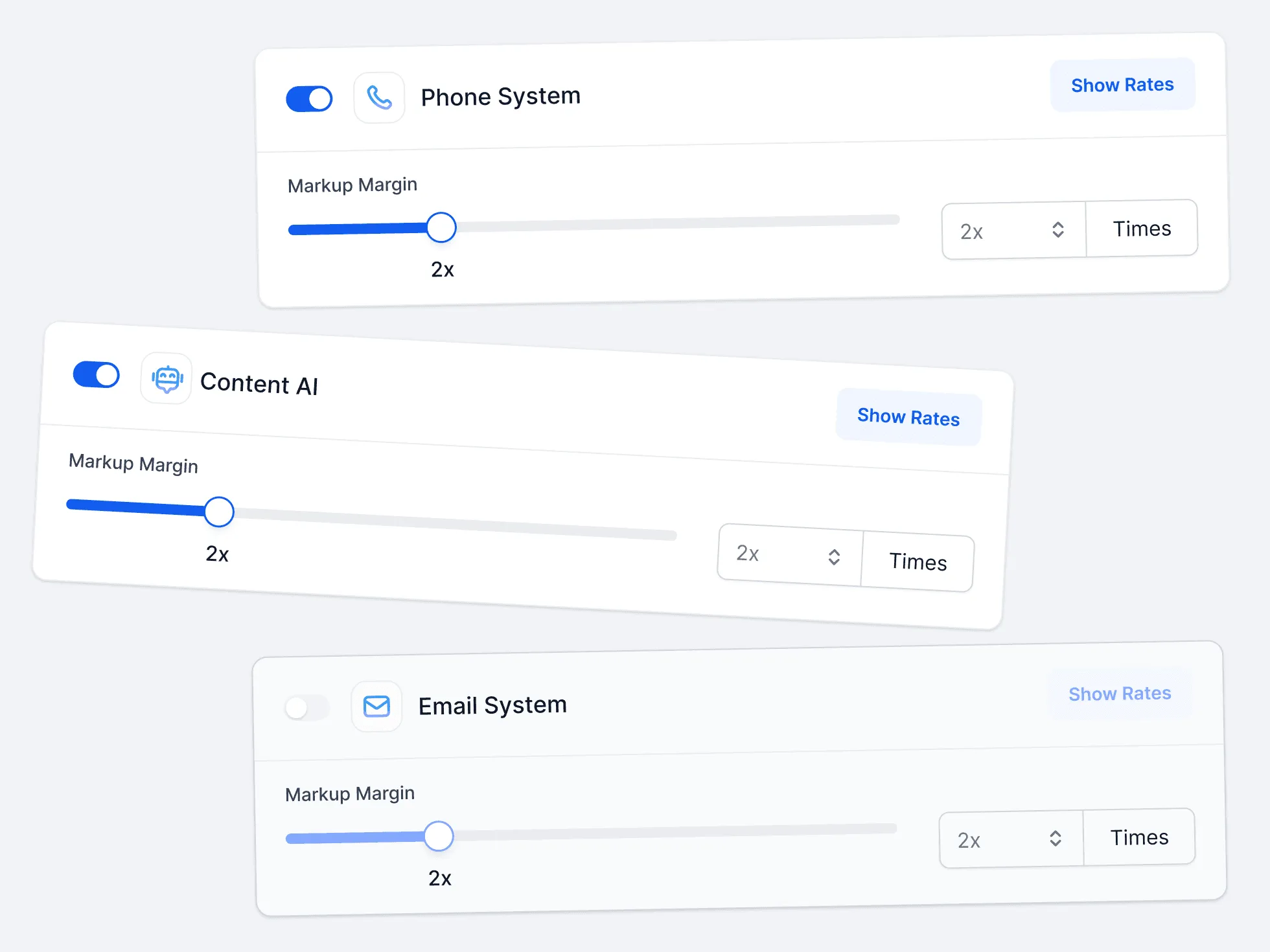
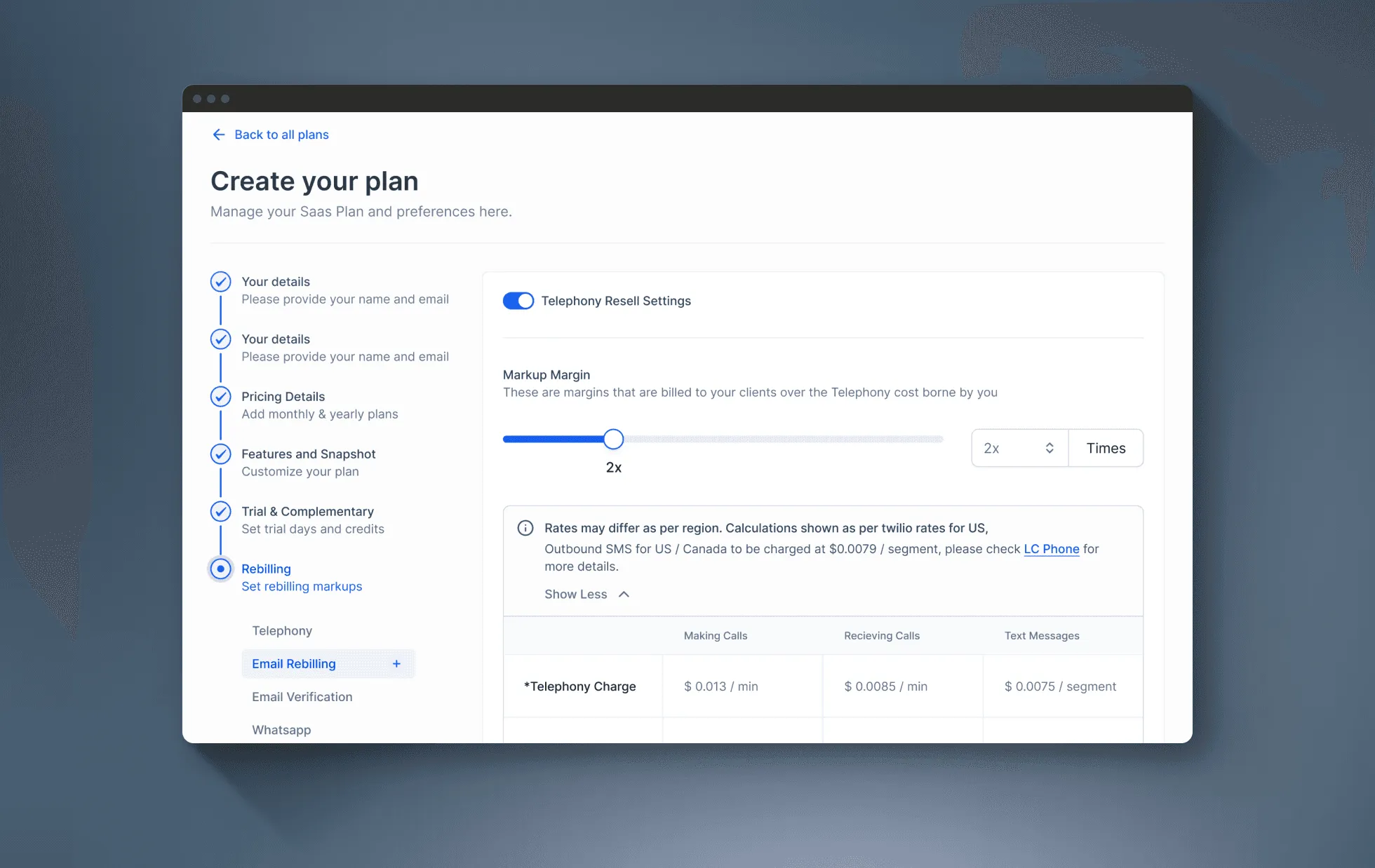
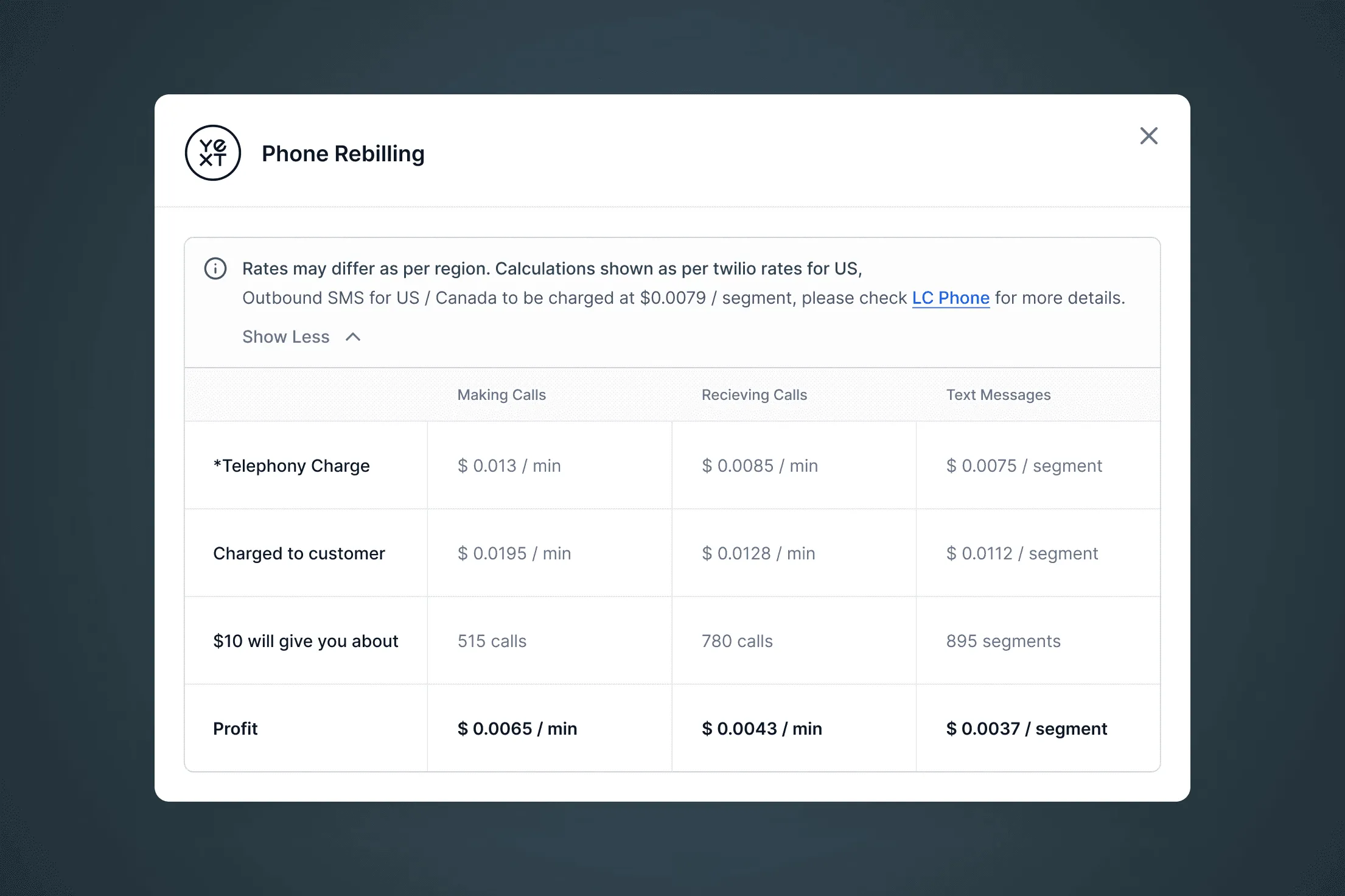
Usage-Based Rebilling
• SMS markup
• Email markup
• Phone markup
• Review engine markup
• AI-related usage controls
Agencies define margin per tier.
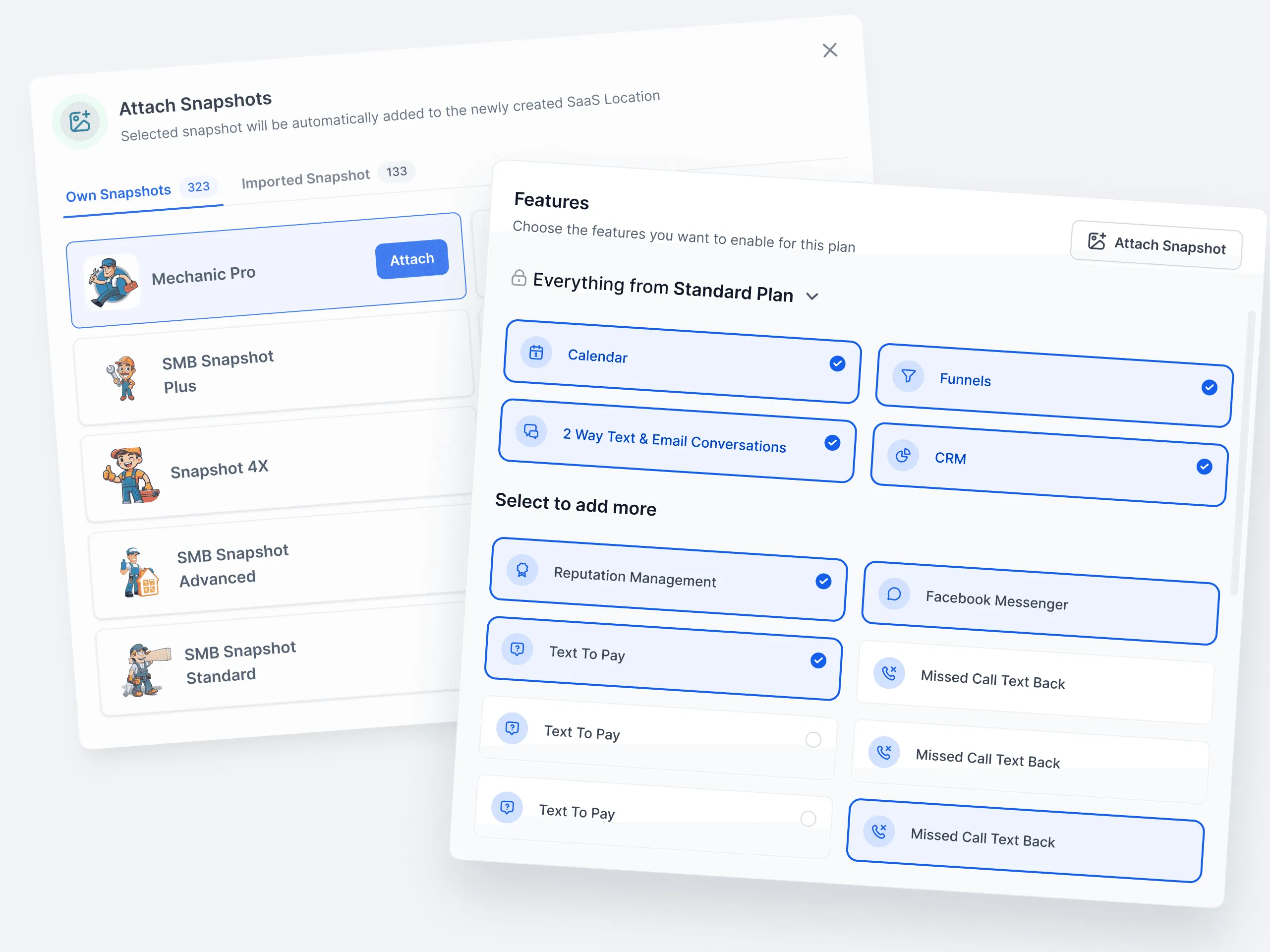
Each tier provisions a ready-to-run SMB environment.
Agencies configure:
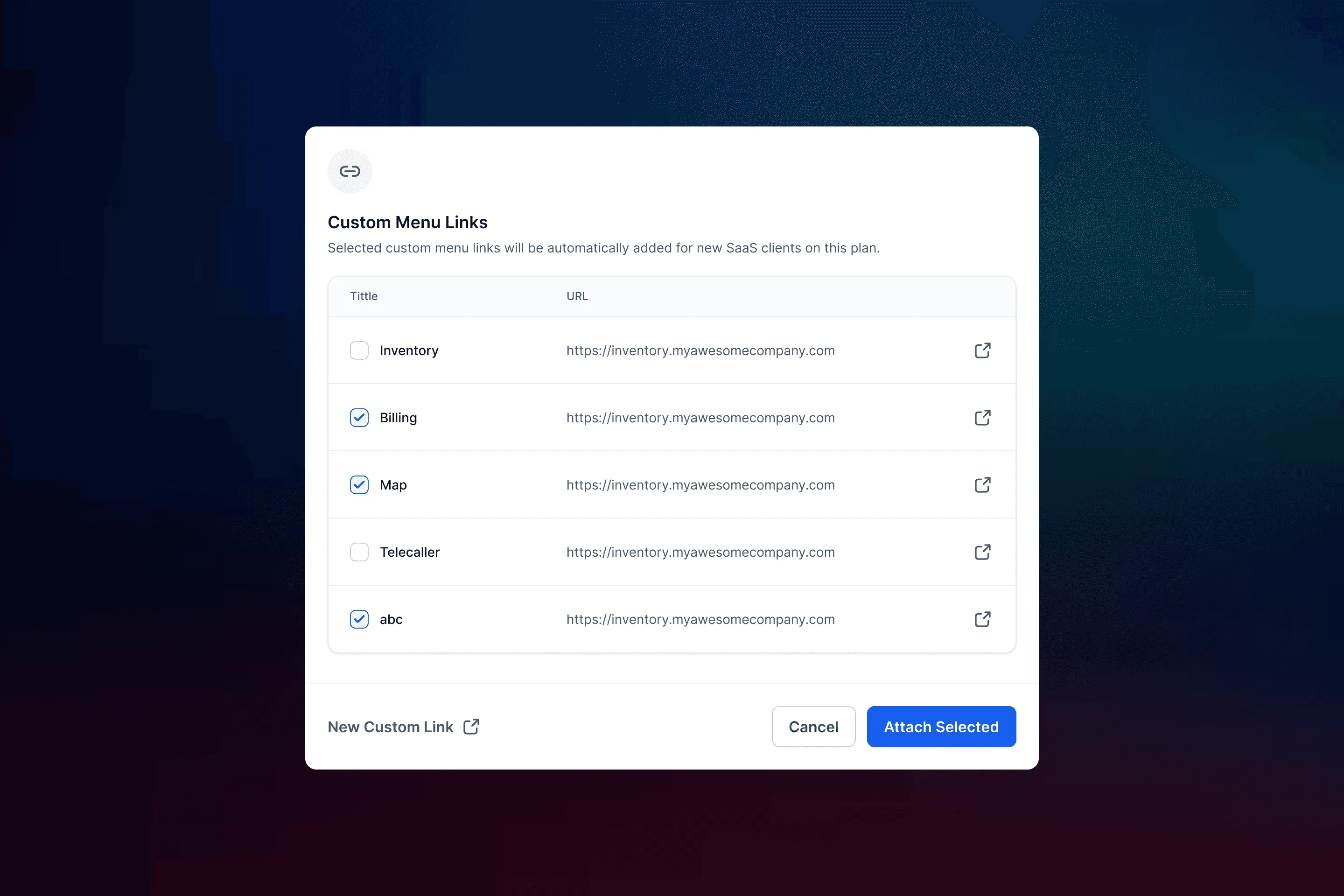
• Snapshot attachment (vertical-specific setup)
• Core feature inclusion
• Optional feature toggles per tier
• Feature access boundaries

Achievements
I led the redesign of the SaaS Plan Configurator that helped unlock a new revenue model for thousands of agencies. Post-launch, custom plan creation grew ~72% MoM. Trial-to-paid conversion improved ~16%. Churn dropped ~35% as pricing, limits, and provisioning finally aligned. This wasn’t a surface update. It became core infrastructure behind the SaaSpreneur movement — contributing to $140M+ in SaaS revenue and 2.1M+ small businesses served globally.
Across Facebook communities and live town halls, agencies shared real stories — hitting $10K MRR, scaling to $100K months, moving from unstable retainers to predictable recurring revenue. This feature didn’t just optimize pricing. It gave operators financial leverage. It helped agencies move from survival to scale.
Why I’m Proud?
Because I didn’t just design screens.
I helped design a system that changed how agencies earn.
And when a structural decision unlocks recurring revenue for thousands of operators around the world — that’s impact you feel.
Not just measure.